A well-maintained lawn is the foundation of any attractive outdoor space. In Noosa Heads, the subtropical climate means grass grows actively for most of the year, which is both a blessing and a challenge. The good news is that with the right approach to mowing and edging, you can maintain a lawn that looks professionally cared for without spending every weekend on it.
Here are practical, proven tips that work specifically for Noosa Heads conditions.
Understanding Your Grass Type
Before you can maintain your lawn effectively, you need to know what you are working with. The most common grass types in the Noosa Heads area include Buffalo, Couch, Kikuyu, and Zoysia. Each has different mowing height requirements, growth rates, and care needs.
Buffalo grass, which is popular in the region, should generally be mowed at 30-50mm height. Couch grass prefers a shorter cut at 15-25mm. Kikuyu is vigorous and needs regular mowing at 25-40mm. Zoysia is slower growing and does well at 25-35mm.
Mowing at the wrong height is one of the most common mistakes homeowners make. Cutting too short scalps the lawn, exposes soil to the sun, encourages weed growth, and stresses the grass. Cutting too high can lead to thatch build-up and a spongy, uneven surface.
The One-Third Rule
Never remove more than one-third of the grass blade length in a single mow. This is the most important rule in lawn care, and it applies regardless of grass type. Removing more than a third stresses the plant, reduces its ability to photosynthesise, and weakens the root system.
In practice, this means mowing more frequently during peak growing seasons (spring and summer in Noosa Heads) and less often during the cooler months. If your lawn has gotten away from you, bring it back to the desired height gradually over two or three mows rather than scalping it in one go.
Mowing Pattern and Technique
Vary your mowing direction each time you mow. If you mowed north-south last time, go east-west next time. This prevents the grass from developing a grain or lean in one direction and promotes more upright, even growth.
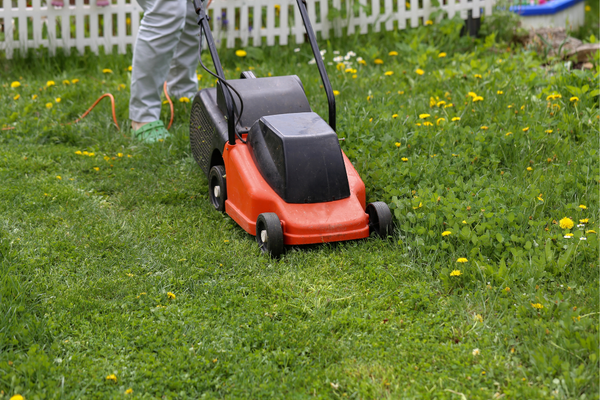
Overlap your mowing passes slightly to avoid leaving strips of uncut grass. Keep your mower blades sharp; dull blades tear the grass rather than cutting it cleanly, which creates a ragged appearance and makes the lawn more susceptible to disease.
The Art of Clean Edging
Edging is what separates a good-looking lawn from a great-looking one. Clean, defined edges along driveways, pathways, garden beds, and fence lines give the entire property a polished, professional appearance.
Use a dedicated edger or line trimmer held vertically to create a clean cut along hard surfaces. For garden bed borders, a half-moon edger or flat spade creates a neat separation between lawn and garden.
Edge every time you mow, or at minimum every second mow. Once edges are established, maintaining them is quick and easy. Letting them go means grass creeps into garden beds and over paths, which takes much more effort to correct later.
Timing Your Mowing
The best time to mow in Noosa Heads is mid to late morning, after the dew has dried but before the heat of the day. Mowing wet grass leads to uneven cuts, clumping, and can spread fungal diseases. Mowing in extreme heat stresses both you and the lawn.
During summer, you may need to mow weekly or even twice weekly for fast-growing varieties like Kikuyu. In winter, fortnightly or even monthly mowing is usually sufficient.
Dealing With Clippings
For regular mowing where you are only removing a small amount of growth, leaving clippings on the lawn is beneficial. They break down quickly and return nutrients to the soil. This is called grasscycling and can reduce your fertiliser needs by up to 25 percent.
However, if the grass is long and the clippings are thick, collect them. Heavy clippings can smother the lawn, block sunlight, and create thatch. If you notice clippings clumping on the surface, either collect them or spread them out with a rake.
Seasonal Adjustments
Noosa Heads has a distinct seasonal pattern that affects lawn care:
**Spring (September-November):** Growth accelerates. Increase mowing frequency and lower the cutting height slightly. This is a good time to edge thoroughly and address any winter damage.
**Summer (December-February):** Peak growth period. Mow frequently but raise the cutting height slightly to help the grass cope with heat and retain moisture. Water deeply but less frequently to encourage deep root growth.
**Autumn (March-May):** Growth slows. Maintain regular mowing but you can start extending the interval between cuts. This is a good time for dethatching if needed.
**Winter (June-August):** Minimal growth. Reduce mowing frequency significantly. Raise the cutting height to protect the grass during cooler periods.
When to Call the Professionals
Even with the best intentions, maintaining a lawn to a high standard takes time and consistency. If you find yourself falling behind, or if your lawn has developed issues despite your efforts, professional help is the most efficient solution.
A professional lawn service has the right equipment, knowledge of local conditions, and the consistency to keep your lawn in peak condition year-round. Many Noosa Heads homeowners find that a regular professional mowing and edging service saves them time, produces better results, and is more cost-effective than maintaining and storing their own equipment.
Need Help With Your Garden?
Our team of local Noosa gardeners is ready to help. Get a free, no-obligation quote today.